
160 lines
7.7 KiB
Markdown
160 lines
7.7 KiB
Markdown
---
|
||
page-title: "How to Flush DNS on Mac – MacOS Clear DNS Cache"
|
||
url: https://www.freecodecamp.org/news/how-to-flush-dns-on-mac-macos-clear-dns-cache/
|
||
date: "2024-10-28 11:00:36"
|
||
---
|
||

|
||
|
||
In this tutorial, you will learn why flushing your DNS cache is important, and how you can clear the cache on your local system.
|
||
|
||
Here is what we'll discuss in this guide:
|
||
|
||
1. [What is DNS cache?](https://www.freecodecamp.org/news/how-to-flush-dns-on-mac-macos-clear-dns-cache/#intro)
|
||
1. [Why flushing DNS cache is important](https://www.freecodecamp.org/news/how-to-flush-dns-on-mac-macos-clear-dns-cache/#why)
|
||
2. [How to flush DNS cache on MacOS](https://www.freecodecamp.org/news/how-to-flush-dns-on-mac-macos-clear-dns-cache/#howto)
|
||
1. [How to access the terminal application on MacOS](https://www.freecodecamp.org/news/how-to-flush-dns-on-mac-macos-clear-dns-cache/#terminal)
|
||
2. [How to clear DNS Cache for your MacOS version](https://www.freecodecamp.org/news/how-to-flush-dns-on-mac-macos-clear-dns-cache/#version)
|
||
|
||
## What is DNS Cache?
|
||
|
||
DNS acts much like an internet phonebook. Think of what a phonebook does – it maps a person's name to their respected phone number.
|
||
|
||
DNS (short for Domain Name System) maps domain names to their associated IP addresses.
|
||
|
||
A domain name, such as `freecodecamp.org`, is easily read, understood, and recalled by humans.
|
||
|
||
IP addresses (IP is short for Internet Protocol) is an address that is machine-readable and consists of a unique series of numbers. These numbers identify a device connected to the Internet.
|
||
|
||
Their format is not that human-friendly since it is hard to remember an exact sequence of numbers each time you want to visit a website.
|
||
|
||
DNS then maps `freecodecamp.org` to its associated IP address - `104.26.3.33`.
|
||
|
||
Think of the DNS cache as a local storage area on your Mac.
|
||
|
||
It temporarily stores and keeps track of your computer's activity records like recent website visits.
|
||
|
||
Each time you visit a website by typing its URL (short for Uniform Resource Locator), the DNS cache will save the IP address associated with that website.
|
||
|
||
When you visit that same website for the second time, the lookup process is more efficient, and the lookup time is much shorter.
|
||
|
||
It helps save significant time.
|
||
|
||
### Why Flushing DNS Cache Is Important
|
||
|
||
You should flush the DNS cache for a few reasons.
|
||
|
||
The two most important ones are:
|
||
|
||
1) **Flushing DNS is a helpful step for troubleshooting Internet connectivity issues**.
|
||
|
||
You may be getting DNS errors in your browser, such as the 'DNS Server Not Responding' message when trying to access a site and establish a connection.
|
||
|
||
Keep in mind that your local cache information can become outdated over time.
|
||
|
||
When DNS updates happen on a website, your Mac is still using the old, inaccurate information to load the requested page.
|
||
|
||
Flushing the DNS cache makes sure cache information is up to date.
|
||
|
||
2) **Flushing the DNS cache prevents network security threats, malicious attacks, and DNS cache poisoning from happening**.
|
||
|
||
Hackers can access and corrupt your saved DNS cache records.
|
||
|
||
For example, they could manipulate and change the IP address associated with a Domain Name of a website you have already visited and map it to a malicious one.
|
||
|
||
The next time you request to access that same website, there will be a redirection to a fake and corrupted URL.
|
||
|
||
Hackers can request personal and sensitive information, such as credit card numbers, and steal it.
|
||
|
||
Frequent flushing of the DNS cache will help prevent this from occurring.
|
||
|
||
Clearing the DNS cache on your Mac is a relatively straightforward process, even if you don't have a lot of technical knowledge.
|
||
|
||
Here is what you will need:
|
||
|
||
- Access to the command line,
|
||
- Your computer password,
|
||
- To enter a text command (the command will depend on the version of macOS you are running).
|
||
|
||
### How to Access The Terminal Application on MacOS
|
||
|
||
macOS has a built-in CLI (Command Line Interface) named `Terminal.app`, which allows you to enter text-based commands that the Operating System will carry out.
|
||
|
||
There are a few ways to open the terminal.
|
||
|
||
The easiest way is through Spotlight search.
|
||
|
||
For this, you can:
|
||
|
||
- Either navigate to the very top right corner of the screen and click on the icon that looks like a magnifying glass.
|
||
- Or, you can also use the `Command Space` shortcut.
|
||
|
||
Both will open up the following window:
|
||
|
||

|
||
|
||
From there, start typing `terminal` and click on the `Terminal.app` option that appears.
|
||
|
||
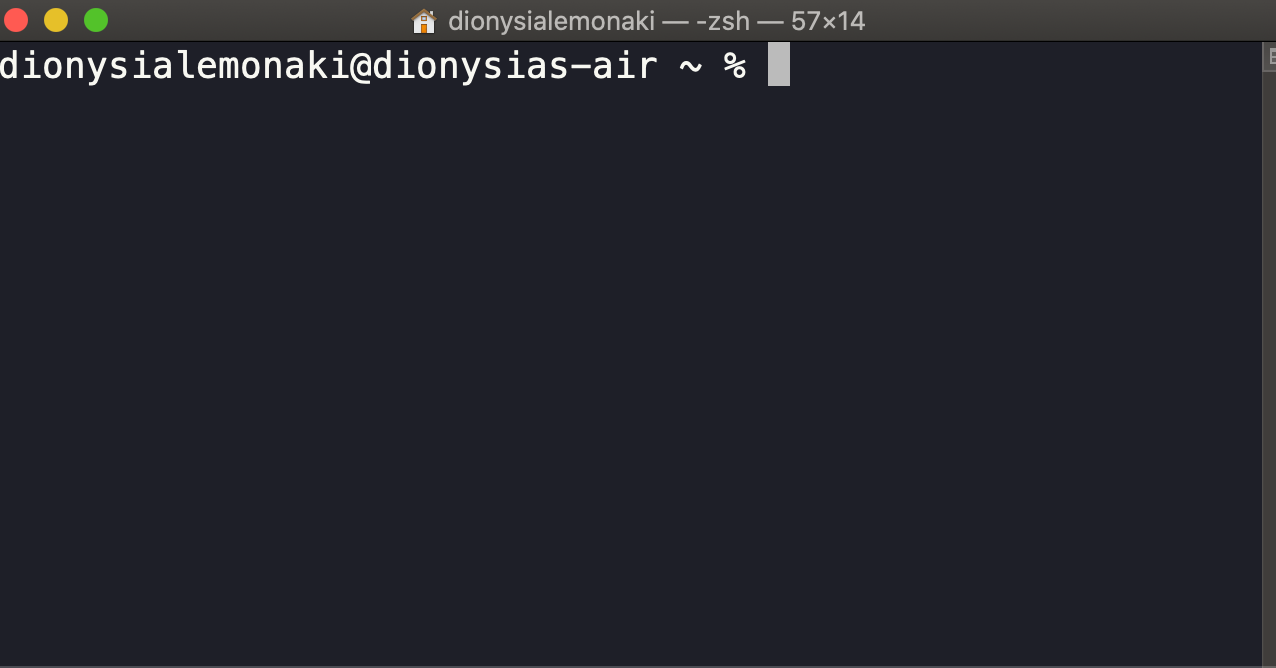
You should see a window open that looks similar to the following:
|
||
|
||
|
||
|
||
### How to Clear DNS Cache For Your MacOS Version
|
||
|
||
In the terminal window, you will then need to enter a command.
|
||
|
||
The command is different depending on the version of macOS you are running.
|
||
|
||
Each version of macOS has a version number and a version name.
|
||
|
||
To find out the macOS version on your computer, click on the Apple icon at the very top left corner of your screen. From the dropdown menu that appears, select `About This Mac`.
|
||
|
||
In the `Overview` tab, you will first see the version name. Then, underneath that, you will see the version number.
|
||
|
||

|
||
|
||
In the table below, you will see the versions of macOS in reverse chronological order – from the most recent one to the oldest one.
|
||
|
||
Navigate to your version of Mac and copy the respective command.
|
||
|
||
| MacOS Version | Command |
|
||
| --- | --- |
|
||
| macOS 12 (Monterey) | `sudo dscacheutil -flushcache; sudo killall -HUP mDNSResponder` |
|
||
| macOS 11 (Big Sur) | `sudo dscacheutil -flushcache; sudo killall -HUP mDNSResponder` |
|
||
| macOS 10.15 (Catalina) | `sudo dscacheutil -flushcache; sudo killall -HUP mDNSResponder` |
|
||
| macOS 10.14 (Mojave) | `sudo killall -HUP mDNSResponder` |
|
||
| macOS 10.13 (High Sierra) | `sudo killall -HUP mDNSResponder` |
|
||
| macOS 10.12 (Sierra) | `sudo killall -HUP mDNSResponder` |
|
||
| OS X 10.11 (El Capitan) | `sudo killall -HUP mDNSResponder` |
|
||
| OS X 10.10 (Yosemite) | `sudo discoveryutil udnsflushcaches` |
|
||
| OS X 10.9 (Mavericks) | `sudo killall -HUP mDNSResponder` |
|
||
| OS X 10.8 (Mountain Lion) | `sudo killall -HUP mDNSResponder` |
|
||
| Mac OS X 10.7 (Lion) | `sudo killall -HUP mDNSResponder` |
|
||
| Mac OS X 10.6 (Snow Leopard) | `sudo dscacheutil -flushcache` |
|
||
| Mac OS X 10.5 (Leopard) | `sudo lookupd -flushcache` |
|
||
| Mac OS X 10.4 (Tiger) | `lookupd -flushcache` |
|
||
|
||
After typing the command and hitting enter, there will be a prompt for entering your computer's password.
|
||
|
||
Keep in mind that when you are typing your password, you will not be able to view what you are typing – not even any asterisks.
|
||
|
||
It appears as though nothing is happening, but rest assured that something is.
|
||
|
||
Once you have entered your password and hit enter, you will not see a message indicating that the process is complete.
|
||
|
||
Instead, you will view a new terminal prompt.
|
||
|
||
## Conclusion
|
||
|
||
And there you have it – your local DNS cache is now clear.
|
||
|
||
Hopefully, this has helped resolve any connectivity issues you may be experiencing.
|
||
|
||
Clearing DNS frequently is always a good idea to help fix troublesome internet connections and ensure your system is secure from potential threats.
|
||
|
||
Thanks for reading!
|
||
|
||
---
|
||
|
||
---
|
||
|
||
Learn to code for free. freeCodeCamp's open source curriculum has helped more than 40,000 people get jobs as developers. [Get started](https://www.freecodecamp.org/learn/) |